
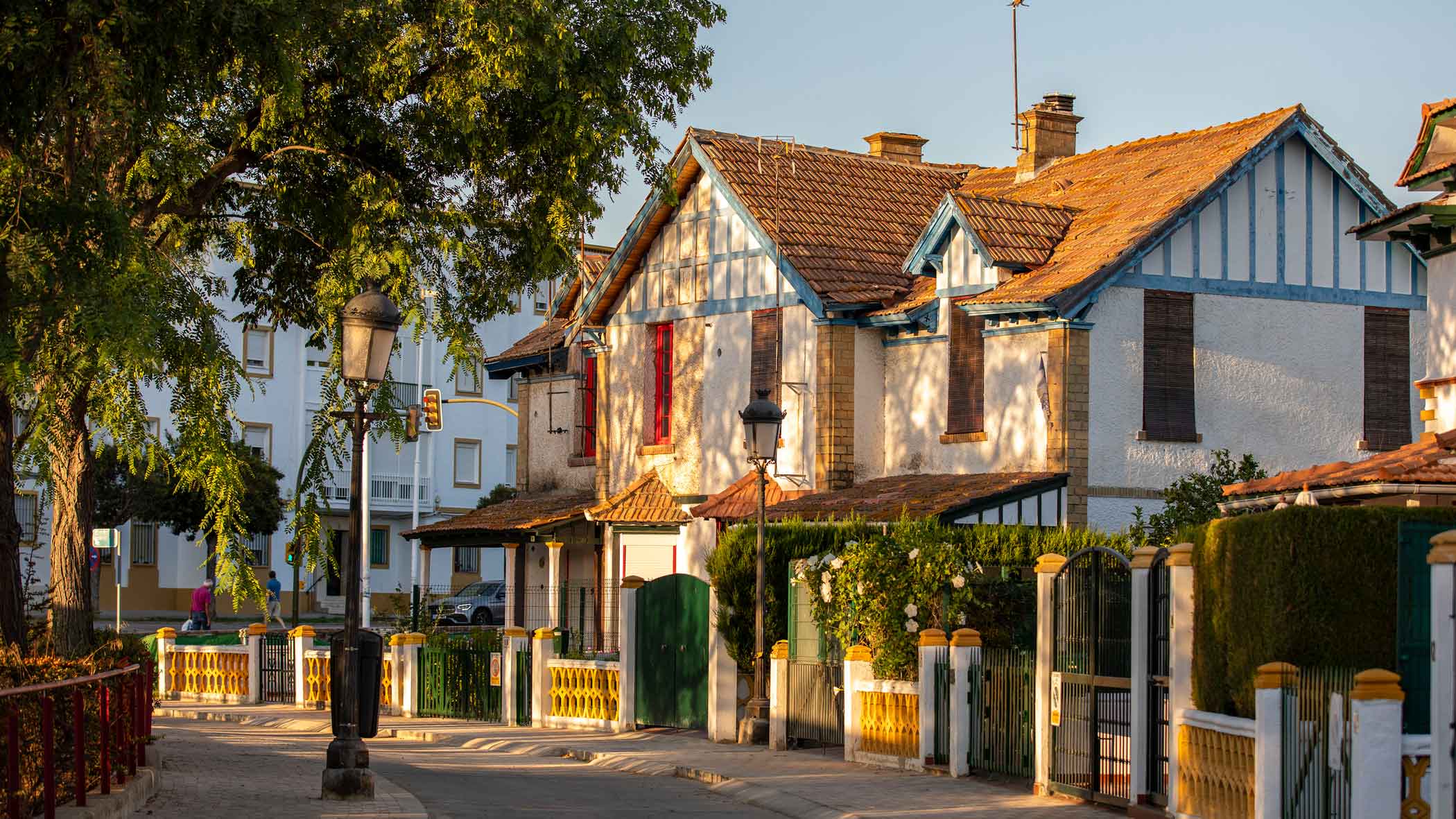
The Reina Victoria quarter
In 1916, the Rio Tinto Company Ltd. built a complex of 71 single-family dwellings for its workers on the Cerro de San Cristóbal hill, which is why the Barrio Reina Victoria was also known as the Barrio Obrero (Workers’ Quarter). It followed the model of the British Garden City, although it also brought together elements of Andalusian, neo-Mudejar and colonial architecture. It’s the work of the municipal architects Pérez Carasa and Gonzalo Aguado, though it was extensively transformed by the engineer Morgan in 1918. Declared an Asset of Tourist Interest, the neighbourhood’s iconic dwellings follow the same pattern: a T-shaped floor plan and a single storey, with large green areas. A different two-storey model was built on the perimeter between 1923 and 1926.
Trivia:
• Despite its origin and appearance, the quarter is named after the then Queen of Spain, Victoria Eugenia de Battenberg, rather than the late Queen Victoria of the United Kingdom.
• Although the working-class neighbourhood is essentially British, the result is an eclectic mix of Andalusian, neo-Mudejar and colonial architecture.
• Since its publication in the Official State Gazette (BOE) on 3 June 1977, the Reina Victoria neighbourhood has been declared an Asset of Cultural Interest.
Conoce más, descarga nuestra app


Te puede interesar
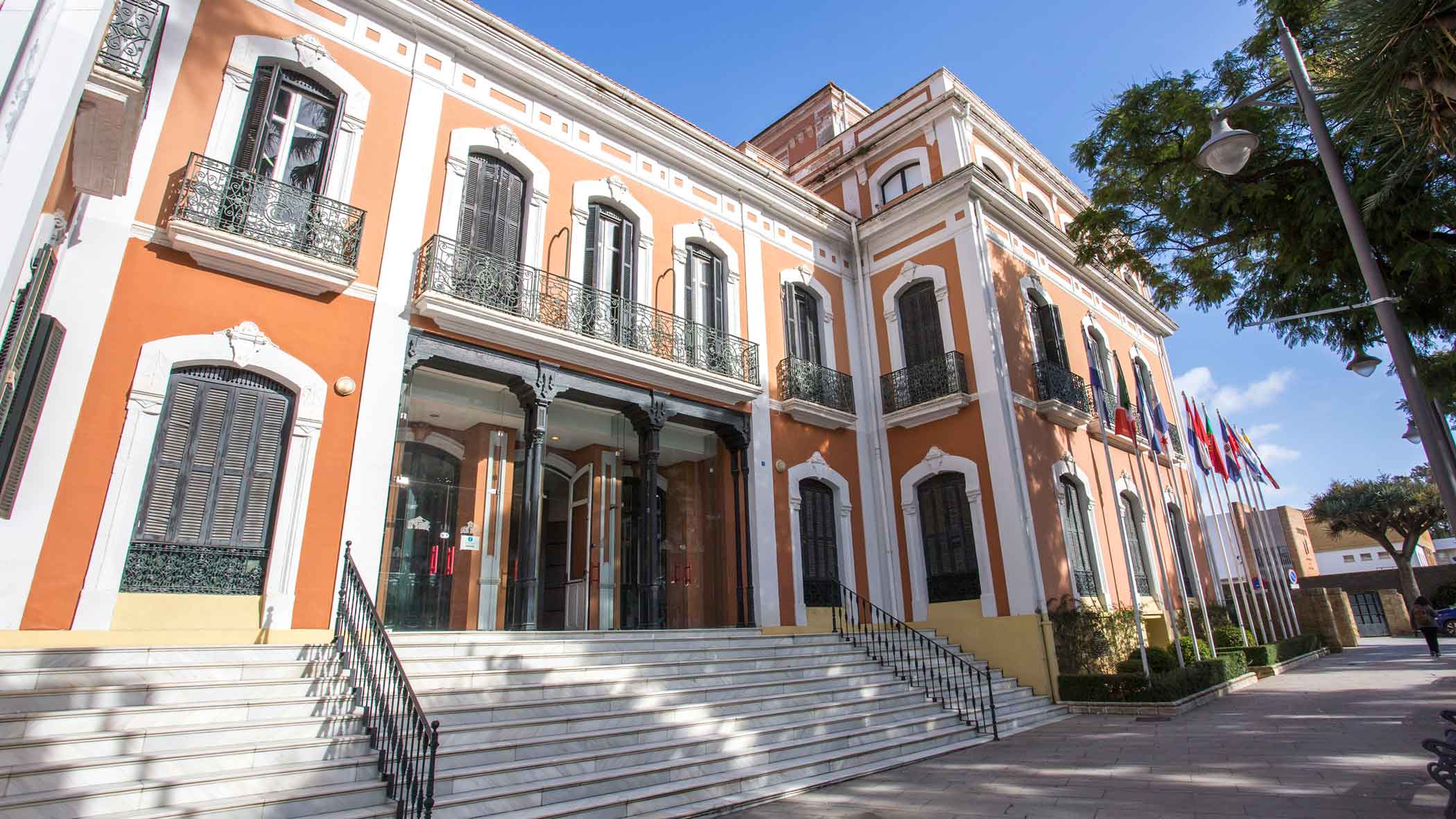
Casa Colón
The Casa Colón was the headquarters of the Rio Tinto Company Ltd. and accommodation for its management from 1896, but in reality, it was built between 1881 and 1883 as a hotel, the Hotel Colón. Its mission was to welcome the personalities who came to Huelva, which was emerging as a thriving mining port at the end of the 19th century, and soon for the commemorative events of the 4th Centenary of the Discovery of America, held between 3 August and 12 October 1892. At the end of the 20th century, it was acquired by the Huelva City Council, which uses it as a conference centre and exhibition centre, including an exhibition on the British Legacy. With the founding act of the Huelva Recreation Club on 18th December 1889, it was at the very origin of football in Spain.
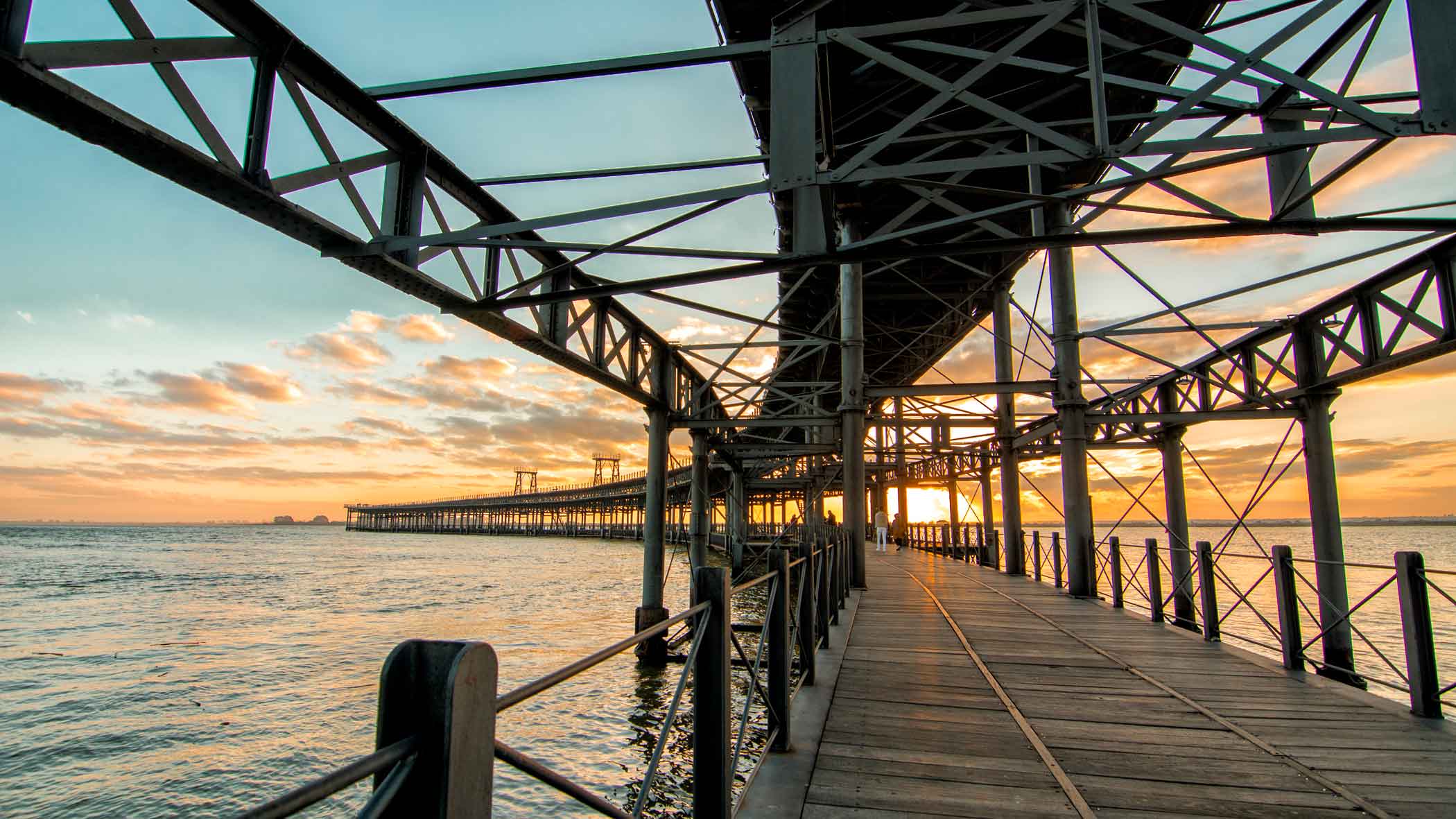
The Rio Tinto Company loading bay
One of the most recognisable icons of Huelva has stood on the Odiel River since 1874, when the Rio Tinto Company Ltd. built a wharf for the minerals extracted in the province’s mines. It is a masterpiece of engineering from the last quarter of the 19th century, which was in use until 1975 and declared an Asset of Cultural Interest in 2003, before being restored in 2007. The mining operations of foreign companies were connected by rail to the sea by means of this quay, which has become one of the heritage landmarks of the capital of Huelva.
Trivia:
• The pier was the final section of a railway line that was more than 84 kilometres long, which connected Huelva with the mines of Rio Tinto.
• It is 1,156 metres long, 500 of which stretch out over the waters of the River Odiel.
• It is estimated that during the almost one hundred years it was in use (between 1876 and 1975), more than 150 million tons of ore were shipped from this quay.