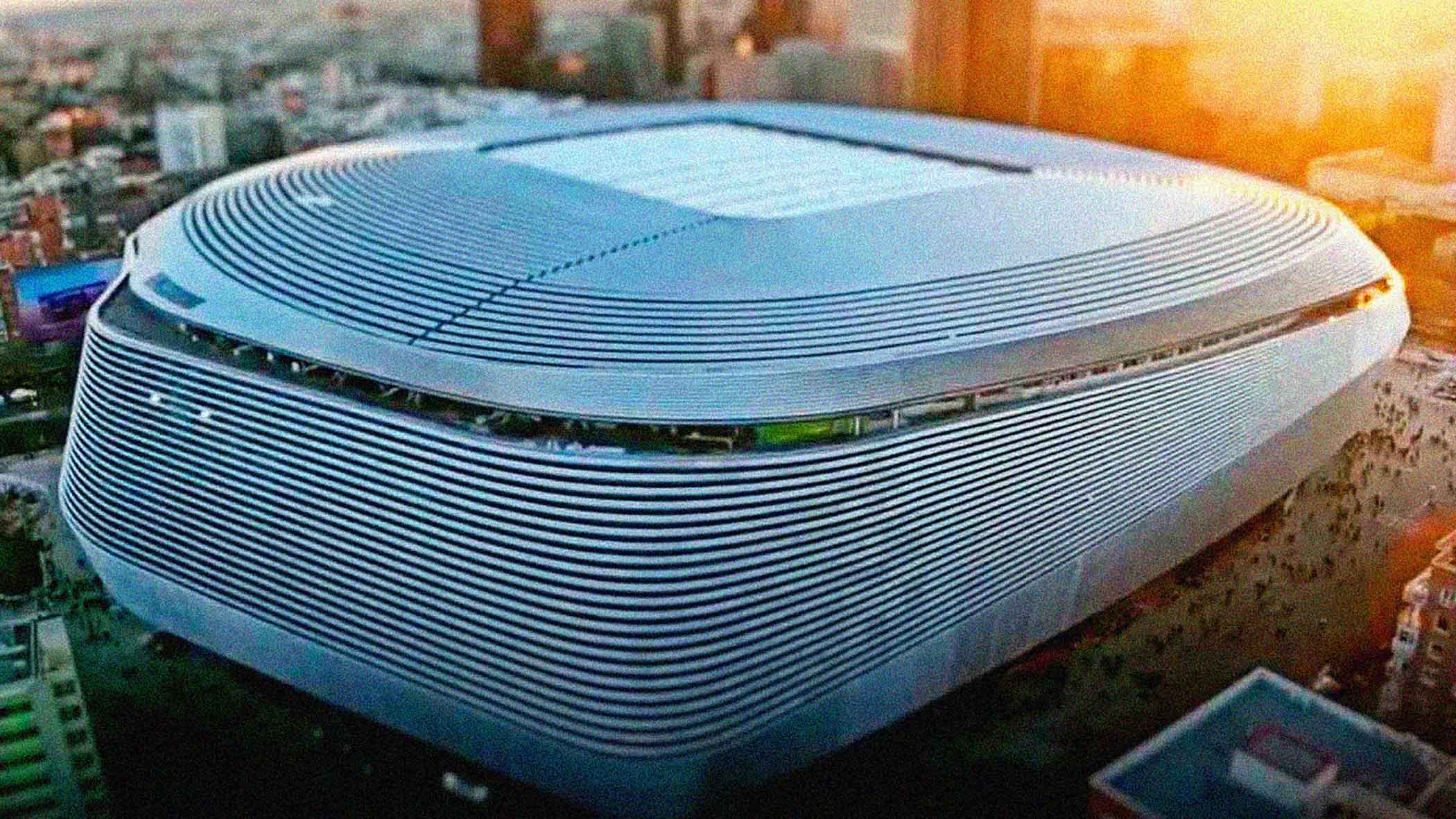
Santiago Bernabéu Stadium
The Santiago Bernabéu Stadium is one of the great temples of world football and a cornerstone of Madrid’s sporting and urban history. Opened in 1947 as the Nuevo Estadio de Chamartín, it was soon renamed after Santiago Bernabéu, the president who spearheaded the modernisation of Real Madrid and turned it into a club of international stature. From its first extensions in the 1950s through to successive refurbishments, the stadium has been the setting for some of the most decisive nights in European and world football.
Beyond its trophy haul, the Bernabéu has grown to become an architectural and social symbol. With a current capacity of nearly 85,000 spectators, following its extensive 21st-century refurbishment, the stadium has been transformed into a state-of-the-art multi-purpose venue, featuring a retractable roof, a 360° video scoreboard and spaces designed for cultural and leisure events throughout the year. This evolution reflects the club’s ambition to remain among the elite, not only in sporting terms but also in terms of technology and finance.
The significance of the Bernabéu extends beyond football. It is a driving force for tourism, a hub of economic activity and a landmark along the Paseo de la Castellana, fully integrated into the city’s daily life. Millions of visitors pass through its doors every year, cementing its status as one of the most recognisable and influential stadiums on the planet.
HOW TO GET THERE
The Santiago Bernabéu has excellent transport links. By metro, the most direct route is Line 10 (Santiago Bernabéu station), located right next to the stadium; nearby stations such as Nuevos Ministerios are also useful. By bus, numerous EMT routes run along the Castellana and stop in the immediate vicinity. For those arriving from other parts of Madrid or nearby towns, the Renfe Cercanías service connects at Nuevos Ministerios with several lines. Access by private car is possible, although parking is limited and public transport is recommended on match days. You can also get there easily by taxi or ride-hailing service, by bike (with BiciMAD stations nearby) or on foot, as the stadium is in a central location and is very well integrated into the urban transport network.
Conoce más, descarga nuestra app